

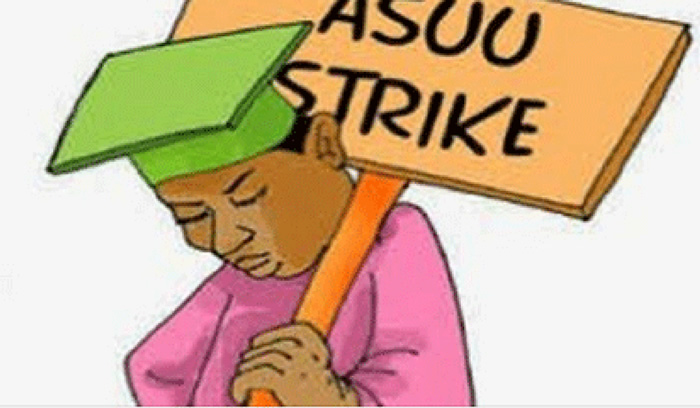
Academic disruptions are resurfacing at some Nigerian state-owned universities, with lecturers’ unions demanding the implementation of agreements covering salaries and allowances.
While many federal universities have enjoyed greater stability following recent federal government measures, several state institutions are facing renewed industrial action. The issue has again raised concerns over funding, staffing and infrastructure in state-owned universities.
The development is linked in part to the December 2025 Federal Government-ASUU agreement, which included a 40 per cent increase in lecturers’ salaries, alongside other provisions such as enhanced allowances and pensions.
In Lagos, the Academic Staff Union of Universities chapters at Lagos State University, Lagos State University of Science and Technology and Lagos State University of Education declared a strike after negotiations with the state government broke down. The unions said the 2025 agreement had not been implemented despite earlier notice.
In Kaduna, lecturers at Kaduna State University, Kakuri, ended their strike after Governor Uba Sani approved implementation of the agreement from October 1. The ASUU chapter at Plateau State University, Bokkos, also ended its strike on September 16 after industrial action over the agreement.
The report also highlights concerns over the number of state-owned universities and the financial pressure on state governments. Nigeria currently has 69 state-owned universities, with some states operating several institutions.
The opinion piece argues that governments should prioritise sustainable funding, staffing and infrastructure before establishing additional universities, while the National Universities Commission should independently scrutinise proposals for new institutions.
