

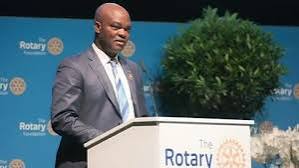
Yinka Babalola, president-elect of Rotary International, has cautioned that Nigerian children remain at risk of contracting polio. If routine immunisation rates do not improve. Speaking at a press briefing in Abuja. Babalola stressed that despite Nigeria’s polio-free certification, poor vaccination coverage leaves millions vulnerable.
According to him, routine immunisation coverage in Nigeria remains alarmingly low, with some states in the Northwest recording as little as 13 percent. He explained that achieving at least 80 percent coverage is essential to build herd immunity. Which prevents the virus from spreading. Without this, he warned, children remain unsafe.
Babalola emphasized that lessons from other countries show the importance of continuous vaccination, even after eradication. “Until routine coverage improves, we cannot say no child is at risk,” he stated.
Beyond polio, Rotary Clubs across Nigeria are actively supporting health centres. Their interventions range from providing nutritional support to ensuring expectant mothers access antenatal care. A crucial step in reducing maternal and infant deaths.
At the national level, Rotary has invested in large-scale health initiatives. A $2 million pilot programme in Gombe, Nasarawa, and the FCT is already recording success in lowering maternal and childhood mortality. Additionally, a $9.8 million project has been launched to fight malaria, diarrhoea, and pneumonia. The top killers of children under five in Nigeria.
Reflecting on Rotary’s decades-long fight against polio, Babalola noted that while 125 countries once struggled with daily infections. Today only Afghanistan and Pakistan remain polio-endemic, with fewer than 50 reported cases last year.
Babalola, who becomes Rotary International’s president on July 1, 2026, reaffirmed the organisation’s commitment: “Our promise to the children of the world is simple polio shall not kill or cripple any child. Until that promise is fulfilled, we remain focused on a polio-free world.”
