

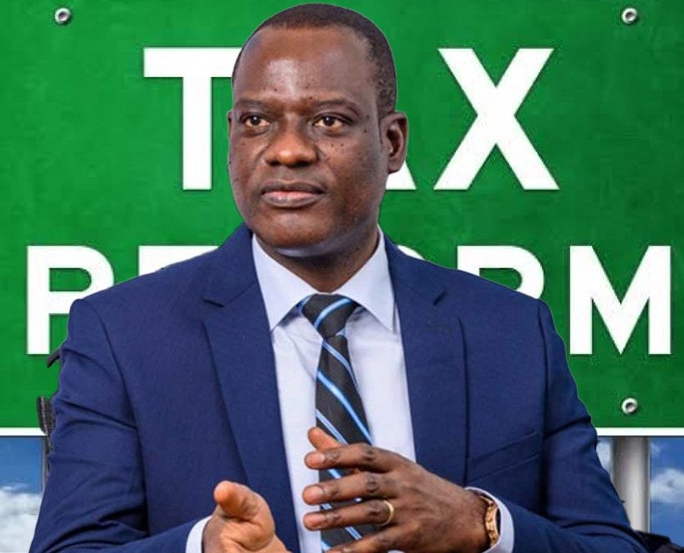
The Chairman of the Chartered Institute of Taxation of Nigeria (CITN), Abuja District, Ben Enamudu, has dismissed claims that Nigerians will be taxed on money in their bank accounts under the new tax regime.
Speaking on ARISE News on Tuesday, Enamudu said the reports are false and have caused unnecessary anxiety among the public.
“There is no provision in our tax laws that taxes money in your bank account,” he said. “Nobody taxes bank balances in Nigeria.”
₦50 Charge Is Stamp Duty, Not a Tax
Enamudu explained that the only charge linked to bank transfers is a ₦50 stamp duty on certain electronic transactions.
“When you transfer money from your account to another person, a ₦50 stamp duty applies. This is not a tax on deposits or balances,” he said.
He added that transfers between multiple accounts within the same bank do not attract the charge.
Who Pays the Stamp Duty
Under the new reform, only the sender pays the ₦50 stamp duty.
“Previously, both the sender and the receiver shared the burden. That has changed. Now, only the sender pays,” Enamudu said.
He also clarified that transfers below ₦10,000 are exempt.
“Once the transfer is ₦10,000 or more, the ₦50 stamp duty applies,” he said.
However, transfers between personal accounts in different banks still attract the duty.
“Even if it is your own money, once it moves from one bank to another, the stamp duty is triggered,” he said.
Salary Payments and Essentials Exempt
Enamudu said salary accounts and salary payments are fully exempt from stamp duty.
He also noted that essential goods and services remain exempt from value-added tax (VAT).
“You don’t pay VAT on basic food items, medicals, pharmaceuticals, education, and other essential services,” he said.
Rent Relief for Tenants
The new tax law also introduces rent relief for tenants.
“If you pay rent, you are entitled to a relief of 20 per cent of the rent paid, subject to a maximum of ₦500,000,” Enamudu said.
He explained how the cap works.
“If your annual rent is ₦3 million, 20 per cent is ₦600,000, but the relief is capped at ₦500,000. If your rent is ₦1 million, your relief is ₦200,000,” he said.
Tax Compliance and Self-Assessment
On compliance, Enamudu said Nigeria operates a self-assessment system.
“You are expected to voluntarily declare your income,” he said.
While employers remit PAYE for salaried workers, individuals with other income sources must file returns themselves.
“If you earn rent or run a business, all income streams must be declared, not just your salary,” he said.
For informal sector operators, such as market women, he said states would apply presumptive taxation.
“States will design structures that are simple and cost-effective,” he added.
New Law Protects Low-Income Earners
Enamudu described the new tax law as strongly pro-poor.
“The law is designed to protect low-income earners,” he said.
He clarified that the widely discussed ₦800,000 threshold refers to taxable income, not gross earnings.
“It is not about how much you earn. It is about your taxable income after deductions,” he said.
He listed allowable deductions, including pension contributions, health insurance, housing fund contributions, insurance premiums, and interest on owner-occupied properties.
“If after all these deductions your taxable income is ₦800,000 or less, you will not pay tax,” he said.
Law Already in Effect
Enamudu confirmed that the tax law took effect on January 4, 2026.
“We are already in the implementation stage, though this is a transitional period,” he said.
He added that improved efficiency would gradually expand the tax base.
“When more people and businesses are captured, revenue will grow, and government will be better positioned to meet its obligations,” he said.
He noted that the reforms aim to tax productivity rather than burden vulnerable citizens.
“Government wants to tax the fruit, not the seed,” he said.
