

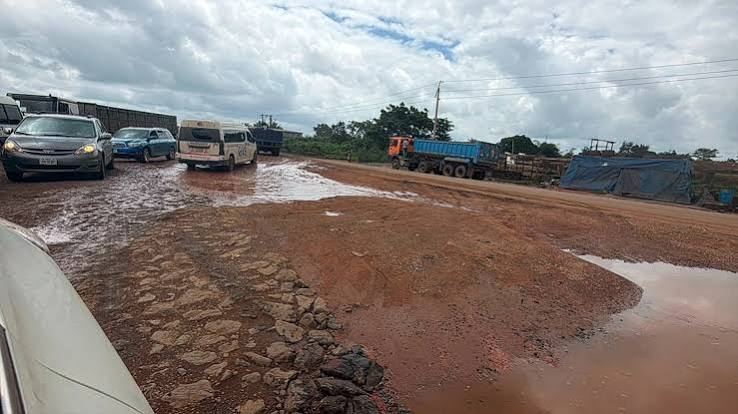
Nigeria’s deteriorating road network has become a growing source of frustration for motorists, transport operators and businesses, with several major highways now struggling to handle the country’s traffic demands.
Although the Federal Government inherited a poor road network from previous administrations, the condition of many major highways has continued to worsen, leading to severe congestion, long travel times and frequent vehicle breakdowns.
Nigeria has an estimated 195,000 to 200,000 kilometres of roads, but only about 60,000 kilometres are paved. A significant portion of these roads requires rehabilitation and regular maintenance.
The Benin-Agbor-Asaba Road has faced similar challenges. The strategic route has experienced serious delays, while progress on its reconstruction has been slower than expected.
Rather than concentrating heavily on new signature projects, there is a strong argument for prioritising existing roads that millions of Nigerians already depend on.
Projects such as the Lagos-Calabar Coastal Highway may have long-term benefits, but critical interstate highways should not be neglected while resources are directed towards ambitious new infrastructure.
Nigeria also needs to reduce its dependence on roads for long-distance transportation by investing more heavily in rail infrastructure. A stronger railway system would reduce pressure on highways, improve freight movement and provide safer alternatives for passengers.
The country’s infrastructure deficit is enormous, and addressing it will require sustained investment, effective planning and stronger oversight of contractors.
Nigeria’s roads are more than infrastructure projects. They are essential to trade, agriculture, transportation and everyday life. Fixing existing highways should remain a national priority alongside the development of new infrastructure.
