

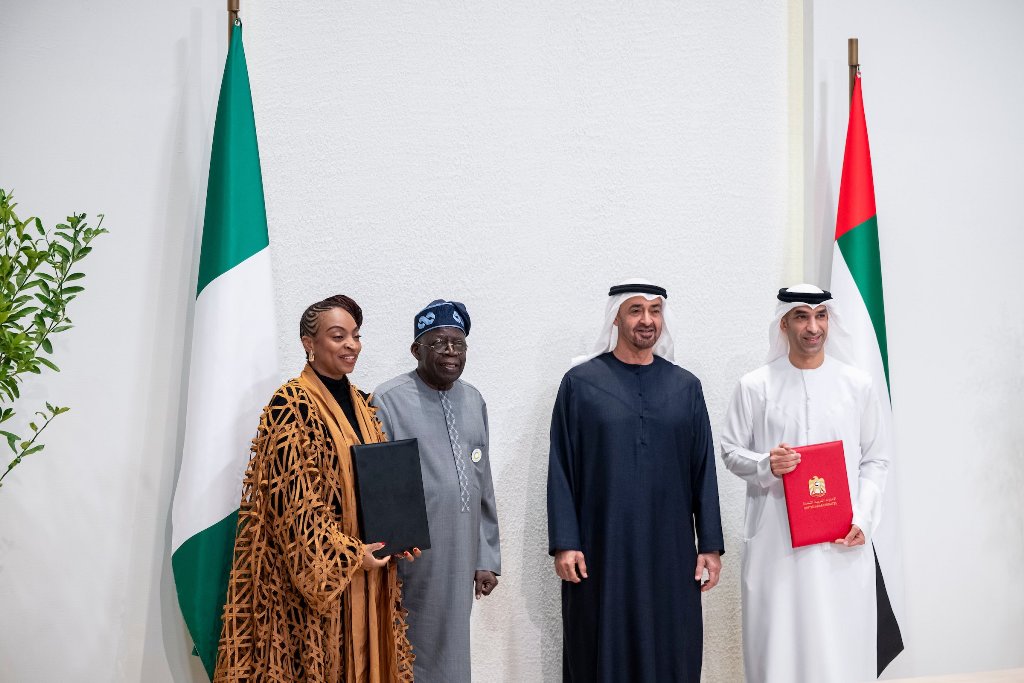
The Federal Government has announced that Nigeria and the United Arab Emirates (UAE) have agreed to eliminate tariffs on thousands of products under a new trade deal aimed at boosting non-oil exports and investment.
According to the Federal Ministry of Industry, Trade and Investment, Nigeria has removed tariffs on 6,243 products imported from the UAE, while the UAE has lifted tariffs on 7,315 Nigerian products. The disclosure followed the signing of the Nigeria–UAE Comprehensive Economic Partnership Agreement (CEPA) in January 2026.
The ministry said the agreement will expand market access for Nigerian goods, businesses and professionals, while encouraging investment and job creation.
Under the pact, Nigeria will immediately eliminate tariffs on 3,949 products and phase out duties on 2,294 products over five years. It excluded 123 products from tariff liberalisation. In return, the UAE will immediately remove tariffs on 2,805 Nigerian products, phase out duties on 4,510 products within three to five years, and exclude 593 products.
The agreement opens the UAE market to Nigerian agricultural, primary, industrial and manufactured goods. Products such as fish, cereals, fruits, cocoa, pharmaceuticals, chemicals, paper and printed materials will enjoy zero tariffs, either immediately or gradually. However, the UAE will retain bans on items like pork, narcotics, used tyres and asbestos products.
Nigeria will also grant market access to UAE goods, removing tariffs on fuel, machinery, vehicles, electrical equipment, iron and steel, while phasing out duties on selected food and consumer items. Nigeria’s import prohibition list remains unchanged.
Beyond goods, the CEPA covers services and investment, with Nigeria committing 99 services across 10 sectors and the UAE committing 108 services across 11 sectors. Nigerian business owners will be able to enter the UAE to explore opportunities and establish companies.
The government said the agreement supports its Renewed Hope Agenda, strengthens Nigeria’s position as an investment hub in West Africa, and aligns with commitments under the WTO, AfCFTA and ECOWAS. It added that implementation will involve key agencies, including Customs and export promotion bodies.
