

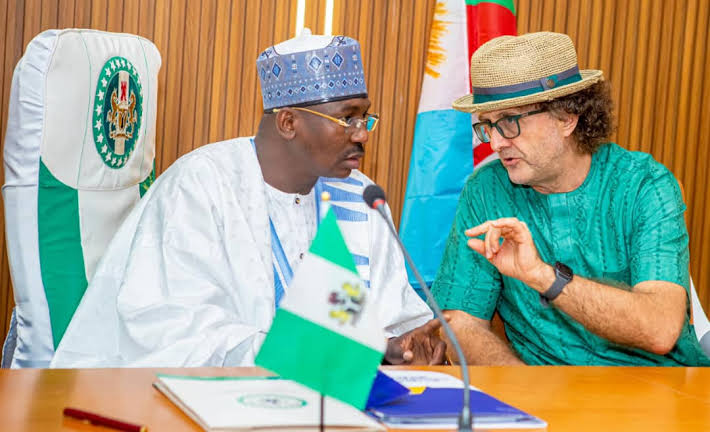
The European Union EU has partnered with Sokoto State to launch a child-focused social protection model. The initiative aims to improve targeting, data quality, and access to essential services for vulnerable households. It is funded through the €14 million Social Support for Social Inclusion programme and implemented by UNICEF and the International Labour Organisation to strengthen Nigeria’s social protection system.
At the launch in Sokoto, UNICEF Deputy Representative Rownak Khan highlighted Nigeria’s progress in building social protection systems. She noted that child poverty remains widespread, multidimensional, and deeply challenging across the country. Khan explained that children often face overlapping deprivations beyond monetary constraints, including lack of schooling, poor nutrition, limited healthcare, missing legal identity, and zero-dose immunisation.
The new model will expand the National Social Register with additional child-focused indicators. It will track out-of-school children, nutrition, health insurance, birth registration, and vulnerability to shocks. Officials said this approach will improve planning, service delivery, and grievance redress mechanisms, particularly in high-poverty local government areas. The initiative prioritizes inclusive and shock-responsive support for the most vulnerable communities.
Sokoto State Governor Ahmed Aliyu pledged government commitment to innovative social protection solutions. UNICEF’s Michael Juma stated that the rollout will serve as a template for other states, with community participation ensuring no household remains “unseen or unreached.” EU representatives Massimo De Luca and Leila Ben Amor emphasized their commitment to improving outcomes for children and vulnerable families.
Development partners expressed confidence that the reforms will deliver measurable impact for children. The initiative aims to build a resilient, inclusive, and child-sensitive social protection system. Sustained collaboration between government, UN agencies, and the EU will ensure successful implementation. The Sokoto pilot represents a model for national replication and long-term social inclusion.
