

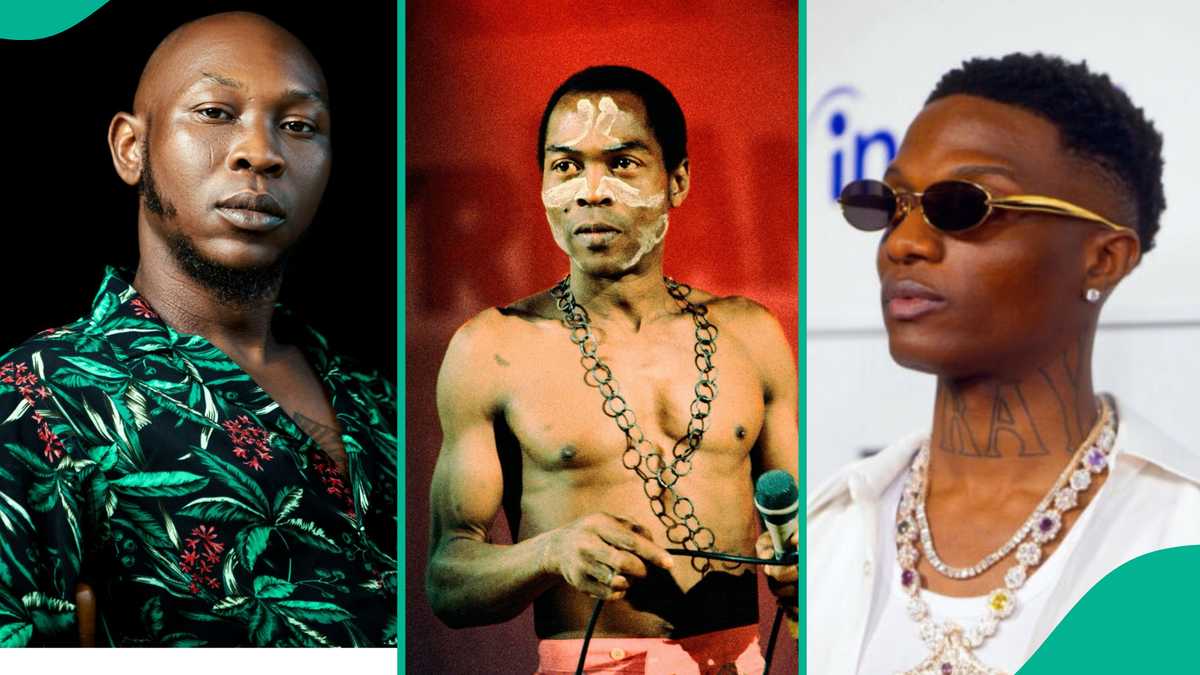
Seun Kuti has reignited controversy in Nigeria’s music scene after launching a fiery tirade against Wizkid FC, the fanbase of Afrobeats star Wizkid, over repeated comparisons between the singer and his late father, Afrobeat pioneer Fela Anikulapo-Kuti.
The outspoken musician and activist, who is Fela’s youngest son, described the comparisons as “insulting” and rooted in ignorance, insisting that modern commercial success should not be equated with the revolutionary legacy his father built through music and political resistance.
“Keep Fela’s Name Out of Your Mouths”
In a viral video that has circulated widely on social media, Seun Kuti addressed the camera while seated and shirtless, a familiar setting for his public addresses. Speaking passionately for over five minutes, he accused Wizkid FC of misusing Fela’s image to validate their favourite artist.
“Wizkid FC, keep Fela’s name out of your mouths,” Seun said. “You try to claim your fake artiste is the new Fela. That is a massive insult.”
He argued that Fela’s legacy extends far beyond music charts or global fame, emphasising the Afrobeat legend’s lifelong political struggle, activism, and persecution by military regimes in Nigeria.
“You people have no respect,” Seun continued. “Your lack of respect comes from ignorance.”
The musician went on to describe Wizkid FC as “the most ignorant fanbase in the world,” questioning why fans feel compelled to draw comparisons instead of celebrating artists on their own terms.
Legacy vs Modern Fame
At the core of Seun Kuti’s outburst is a broader debate about legacy versus popularity. Fela Anikulapo-Kuti pioneered Afrobeat in the late 1960s and 1970s, blending jazz, highlife, and funk with radical political commentary. Albums such as Zombie, Expensive Shit, Sorrow, Tears and Blood, and Coffin for Head of State became protest anthems that openly challenged corruption, colonialism, and authoritarian rule.
Wizkid, born Ayodeji Balogun, rose to prominence in the 2010s, helping to globalise Afrobeats by fusing African rhythms with pop and R&B. With international hits like Essence and multiple sold-out shows at major venues including London’s O2 Arena, Wizkid has become one of Africa’s most commercially successful artists.
While Wizkid has openly cited Fela as an inspiration, Seun insists the two represent entirely different philosophies.
“Fela didn’t just make music,” Seun implied. “He lived the struggle.”
A History of Tension
This is not the first time Seun Kuti has clashed with Wizkid or his fanbase. In 2021, following Wizkid’s Grammy win for Brown Skin Girl, Seun controversially claimed the award belonged to Beyoncé alone and argued that Wizkid was not a “true” Grammy winner. The comment sparked intense backlash online.
Wizkid later responded subtly, telling Seun to “get the sax and make some music,” while also apologising on behalf of his fans for the online attacks.
Wizkid FC Reacts
Wizkid FC responded swiftly to Seun Kuti’s latest comments, flooding X (formerly Twitter) with mixed reactions. While some defended Wizkid and dismissed Seun’s claims, others mocked the musician, reigniting debates over relevance, respect, and generational influence in Nigerian music.
Beyond the Beef
The ongoing comparison between Wizkid and Fela Kuti highlights a deeper conversation about the evolution of Nigerian music—from Afrobeat as a revolutionary tool to Afrobeats as a global commercial force.
While Wizkid represents the modern peak of Afrobeats’ international success, Fela remains a historical figure whose impact transcended music charts and entered the realm of cultural resistance.
As Seun Kuti continues to guard his father’s legacy fiercely, the debate underscores a persistent tension in Nigerian pop culture: can commercial dominance ever be compared to cultural revolution?
