

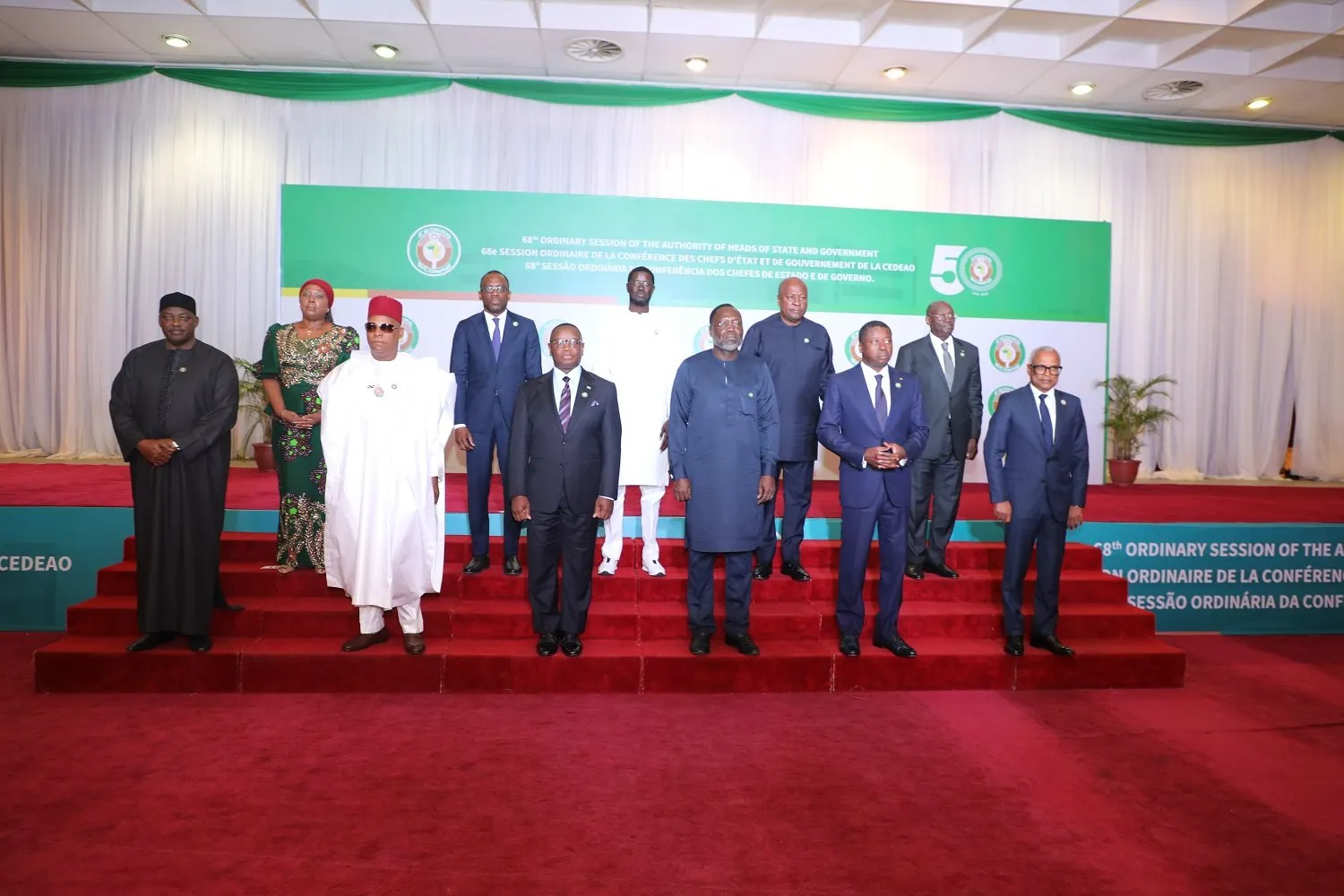
ECOWAS Heads of State and Government, meeting at the 68th Ordinary Session of the ECOWAS Authority in Abuja on Sunday, agreed to forge a proactive and forceful united front to end the spread of military coups and curb terrorism across West Africa. The decision follows repeated military takeovers and ongoing security threats throughout the Sahel region.
Unity Against Borderless Threats
President Bola Tinubu of Nigeria emphasized that incessant coups, organized crime, arms proliferation, cyber insecurity, and terrorism are regional crises demanding collective action, as these criminalities “have no respect for borders.”
“External threats confronting West Africa today demand nothing less than a united front,” the Nigerian leader said. “No single Member State can achieve enduring stability in isolation. Our security and prosperity are indivisible. We must act with shared resolve.”
President Tinubu stressed that ECOWAS’s unity is “not transactional, but foundational,” warning that internal disagreements have weakened the bloc. He affirmed Nigeria’s unwavering commitment to the collective defense of the region’s future.
Decisive Action and Economic Integration
Current ECOWAS Authority Chairman, President Julius Maada Bio of Sierra Leone, described the session as a “defining moment.” He commended Nigeria for its leadership, particularly in the swift, decisive action taken to safeguard constitutional order after the attempted coup in the Benin Republic on December 7, 2025. ECOWAS Commission President, Dr. Omar Touray, cited this rapid response as evidence of strong regional solidarity.
Beyond security, the leaders adopted measures to enhance economic integration:
- Air Travel Cost Reduction: The Authority agreed to implement a landmark measure to significantly reduce the cost of air travel across the region starting January 2026. This includes the abolition of certain air transport taxes and a 25 per cent reduction in passenger and security charges.
- Business Council: Africa’s richest man, Aliko Dangote, was appointed Chairman of the ECOWAS Business Council, a move aimed at facilitating dialogue between the private sector and governments for regional development.
