

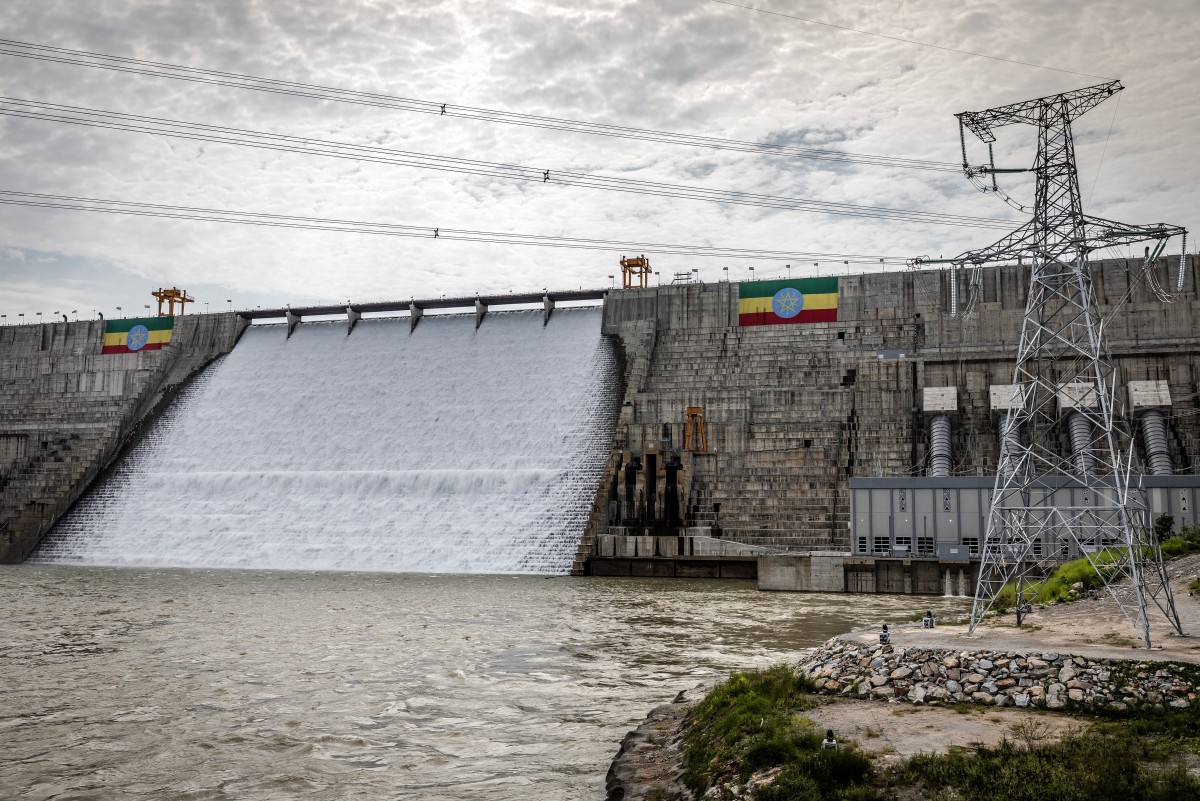
Ethiopia will commission Africa’s largest hydroelectric dam on Tuesday. A project set to redefine the country’s energy landscape and regional influence. The Grand Ethiopian Renaissance Dam (GERD), valued at $4 billion, has become a national symbol of unity despite Ethiopia’s ongoing internal conflicts.
Standing 145 meters tall and stretching nearly two kilometers across the Blue Nile near the Sudanese border. The GERD can hold 74 billion cubic meters of water. Once fully operational, it will generate 5,000 megawatts of electricity, more than doubling Ethiopia’s current power capacity. This milestone is expected to stimulate industrial growth, reduce reliance on costly generators. Also allow electricity exports across East Africa, reaching as far as Tanzania.
For Ethiopia, the timing is critical. World Bank figures show that 45 percent of its 130 million citizens live without electricity. Frequent blackouts in Addis Ababa disrupt businesses and households, forcing many to depend on fuel-powered alternatives. By delivering stable and affordable energy, the GERD positions Ethiopia to accelerate economic development, advance clean mobility, and strengthen its role as a regional energy hub.
Yet, the project has stirred intense geopolitical friction. Egypt, dependent on the Nile for 97 percent of its water, considers the dam an existential threat. President Abdel Fattah al-Sisi insists that Cairo will defend its water rights, calling the issue one of national survival. Sudan has echoed similar concerns, warning about reduced water flows and aligning closely with Egypt in negotiations.
Diplomatic efforts by the U.S., Russia, the African Union, and the World Bank have repeatedly failed to resolve the standoff. Nevertheless, Ethiopia presents the GERD as both an economic lifeline and a powerful symbol of sovereignty. For Prime Minister Abiy Ahmed, this Africa’s Largest Hydroelectric dam embodies Ethiopia’s ambition to lead Africa’s renewable energy future while reinforcing its geopolitical influence.
