

By: Emmanuel Oghenekome Akpoghelie, Emmanuella Obiajulu Chiadika, Great Iruoghene Edo, Asmaa Yahya Al-Baitai, Khalid Zainulabdeen, Sydney Clever Keremah, Irene Ebosereme Ainyanbhor, Patrick Othuke Akpoghelie, Joseph Oghenewogaga Owheruo, Priscillia Nkem Onyibe, Maureen Marris Dinzei, Helen Avuokerie Ekokotu, Ufuoma Ugbune, Ephraim Evi Alex Oghroro & Lauretta Dohwodakpo Ekpekpo
Abstract
Malnutrition and food insecurity are two major diseases combating human development in Nigeria as they cause poor infant development, deteriorating maternal and child health, weaker immune systems, risky pregnancy and childbirth. This paper provides an in-depth overview of the implementation, impact, benefits and costs of the United Nations World Food Programme (WFP), in relation to malnutrition and food insecurity, in northern Nigeria. The primary purpose of the WFP is to meet the immediate food and nutrition needs of those most exposed to acute hunger. However, some of the challenges include conflict and insecurity, rising inflation and the impact of climate crisis. These challenges are been tackled through works at the humanitarian-development-peace nexus, with targeted emergency responses with a view to a sustainable food security for all, which aligns with various partnerships and collaborations. With a comprehensive approach that spans emergency response, long-term development, and humanitarian services through supplementary feeding, nutrition education and capacity building, the WFP has made a significant impact in improving the lives of millions of Nigerians facing the challenges of poverty, conflict, and climate change. Although, there was an increase in food inflation and under-nourishment in Nigeria, the operations of the WFP was positive and significant in contributing to human development in northern Nigeria. It is recommended that the WFP, in collaboration with the government, private sector and other humanitarian agencies, provide a more robust and holistic food assistance and skills development to hunger prone areas in Nigeria. Furthermore, the WEP should provide the necessary support for food production in Nigeria through youth-inclusive and reliable marketing strategies in rural areas.
1 Introduction
Data have shown that Nigeria is endowed with abundant natural resources like crude petroleum, favourable agricultural climate, and other mineral deposits [1]. However, in 2023, about 87 million out of her 220 million people (39.5 percent), still live below the poverty line [2]. This is because Nigeria lacks the required technology to harness these resources capable of improving the standard of living and welfare of the citizens. Besides bad governance, gross corruption, and mismanagement of public funds, Nigeria’s rising level of insecurity, conflict, and rising inflation have been a threat to local farmers and businessmen and also to potential foreign investors [3]. One of the striking impact on the economy is food shortage, and this continues to drive hunger with about 26.5 million people in the country projected to suffer from acute hunger in 2024. This is a sharp increase from the 18.6 million people in the last quarter of 2023 [4]. The conflict situation in the North Eastern region of Nigeria is rampant and has displaced about 2.2 million people and left another 4.4 million food insecure in Yobe, Adamawa, and Borno states. Among these, about 3 million of the people are in Borno State, the heart of insurgency in Nigeria. Over 70% of the population in the North-West and North-East live below the poverty line and depend largely on subsistence farming, which further worsens their vulnerability to food insecurity [5]. The northern part of Nigeria is prone to periodic droughts, where a good percentage of the country’s agricultural produce emanates. However, the central and southern parts are prone to periodic floods. Although, the government has embarked on various policies to curb the effects of these disasters, the adverse effects on agricultural output and the vulnerability of the rural populace are striking [6]. According to the Water Ministry, the key policies include Data Acquisition for Integrated Flood Management, Early Warning System, Coordinated Multi-Sectoral Flood, Development and Management of Flood Plains, and to mention a few [7]. Furthermore, the level of Insurgency in northern Nigeria has added pressure to a weak resource environment, worsened insecurity, deterred development, and heightened the nutrition and food insecurity of vulnerable children and women in the region [8].
The World Food Programme (WFP) started operations in Nigeria in 2016, with the primary aim of providing lifesaving support to humans most in need while working with the government and other national stakeholders /actors to develop an enabling environment and sustainable solutions to help realize Nigeria’s goal of Zero Hunger by 2030 [9].
The WFP has been actively responding to various humanitarian crises and working to address the underlying causes of food insecurity. With a strong presence across the country, the organization collaborates closely with the Nigerian government, local communities, and a network of international partners to deliver life-saving assistance and sustainable development programs [10]. At the heart of the WFP’s work in Nigeria is a commitment to reaching the most vulnerable populations, including Internally Displaced Persons (IDPs): refugees, those affected by conflict, natural disasters, and economic shocks. The organization’s interventions span emergency food distributions, nutrition support, livelihood assistance, and long-term capacity building to help communities become more self-reliant and resilient [11].
The World Food Program (WFP) is focusing its operations to reach out to 1.1 million vulnerable and indigent people, every month, in northern Nigeria. The beneficiaries may include displaced people living in host communities or Internally Displaced People (IDP) camps, as well as vulnerable members of host communities and people returning home after months of being displaced [12].
However, in compliance with the goals and vision of the WFP, the federal government of Nigeria had, over the years, declared an emergency on food insecurity, food pricing, and food sustainability in Nigeria, as a measure of combating malnutrition among vulnerable children in the country. For instance, in 2023 the federal government declared that all matters relating to the availability and affordability of food and water, as essential livelihood items, be included within the cognizance of the National Security Council (NSC) [4]. As an immediate and direct response to the food crisis in the country, several initiatives were deployed to reduce the inflationary trend, and uninterrupted supplies of affordable foods to low income earners in Nigeria. For instance, to check the rising prices of staple foods, the government devised a means to subsidize water and rail transportation for producers to utilize in transporting goods to their customers [13]. A look at the health dimension, particularly physical, spiritual, emotional, environmental, mental and social well-being reveals that poor nutrition is the main drivers of multidimensional poverty in the northern part of Nigeria. However, food insecurity is prevalent in all states, but most acute in northern Nigeria (see Fig. 1), Over 80 million Nigerians, which is about 40% of the total population, experience severe food insecurity with many facing chronic hunger and malnutrition [4]. The vulnerable groups include children, pregnant women, and the elderly. These categories are disproportionately affected with stunting and wasting, prevalent among young children [14]. However, the northern region of Nigeria experience higher rates of hunger and food insecurity when compared to the southern part of the country [15]. Some of the causes of hunger and food insecurity in Nigeria include drought, flood, and soil degradation. These disasters are caused by climate change which have disrupted agricultural production and food availability. Others include rising unemployment, conflicts, civil unrest and lack of access to markets and infrastructure. These limit the ability of Nigerians to afford and obtain nutritious foods. This can also be due to the negative impact of high imports, rising commodity prices and inflation, brought about by the war in Ukraine, and the recent flooding in several states of Nigeria [16]. Hence, the 38.6% of Nigerians reflected as being food insecure might understate current realities [15].
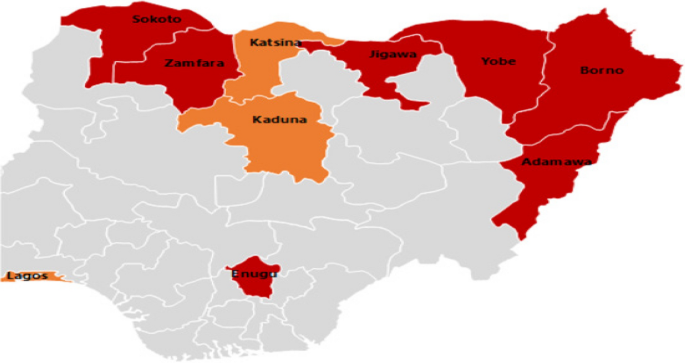
The 2018/19 household survey revealed that the North-West and North-East regions of Nigeria suffer from the most acute levels of food insecurity, and this aligns with data from the recent Cadre Harmonise surveys (see Fig. 1). The survey also recorded large differences in the estimates of food insecurity between rural areas (52 percent) and urban (18 percent) [17].
As part of the declaration, revenue generated from the removal of fuel subsidies were partly used to revamp the agricultural sector [18]. Besides, the Central Bank of Nigeria (CBN) is committed to funding the agricultural value chain. Concessionary capital was allocated to strategic sectors related to fertilizers, mechanization, chemicals, processing, seeds, equipment, labour, and feed with the target of ensuring adequate food supply in the country [19]. In collaboration with individual agricultural stakeholders, the federal government of Nigeria drafted a memorandum to release grains and fertilizers to households and farmers. The aim is to cushion the effects of the subsidy removal and form a synergy between the Ministry of Water Resources and the Ministry of Agriculture, so as to ensure sufficient irrigation of farmlands and guarantee the uninterrupted production of food all through the year [20]. To support this strategy further, the 11 River Basins will ensure a continuous supply of water to encourage the planting of crops during the dry season. This will stem the scarcity and seasonal glut experienced in the country. The declaration created and supported a National Commodity Board (NCB) whose primary mandate was to maintain a strategic food reserve that will be used as a price stabilization mechanism for special grains and other food items, by reviewing and continuously assessing food prices in Nigeria [21]. Through the NCB the government aimed to moderate and stabilize fluctuations in food prices. Some of the stakeholders to support the NCB in achieving its mandates include Seed Companies, Food Processing/ Agriculture Processing Associations, the National Commodity Exchange (NCX), NIRSAL Microfinance Banks, National Agricultural Seed Council and Research Institutes, Private Sector Holders, Prime Anchors, Suppliers Associations, Crop Associations, Fertilizer Producers and to mention a few [22]. Furthermore, the federal government declared an improved security network in the northeastern part of the country to protect farmers while on and off their farms. This is because agricultural production can only thrive in a conducive environment that is free from insurgency, bandits, cattle rustlers, kidnappers, etc. In his New Year address to the nation on January 1, President Bola Ahmed Tinubu declared about 500,000 hectares of land to increase the availability of arable land capable of boosting food production in the country. The government also collaborated with mechanized companies to clear more forests and make more land available for agriculture [23]. Warehouses and tanks have been revamped to cut waste and ensure efficient preservation of food items which will ultimately stabilize their prices [24]. The ultimate benefit of this declaration will be human capital development through the production of food, improved health, massive job creation, and employment in Nigeria.
This report is relevant in informing policy decisions that are evidence-based and can provide a good foundation for the implementation and design of programs to better people’s welfare, particularly at the rural level [25].
2 WFP key objectives and initiatives
The primary objectives of the WFP in Nigeria are to save and change the lives of indigent Nigerians through the provision of food and other necessities of life. This is motivated by the fact that 39% of people in Nigeria live below the poverty line out of which about 4.4 million and 2.2 million people are food insecure and internally displaced in northern Nigeria, respectively [8]. The WFP’s operations in Nigeria are guided by a comprehensive strategy that aims to achieve other several key secondary objectives which include:
- i.providing immediate food and nutrition assistance to those in crisis,
- ii.supporting the restoration of agricultural livelihoods and food production,
- iii.strengthening the capacity of local institutions and communities to respond to shocks,
- iv.promoting sustainable solutions to address the root causes of food insecurity,
To achieve these objectives, the WFP implements a diverse range of initiatives, including emergency food distributions, school feeding programs, nutrition interventions, and agricultural development projects. The WFP in northern Nigeria is focused on improving the lives of vulnerable women and children through food assistance, nutrition resilience, capacity strengthening, logistics, and United Nations humanitarian air services [26]. These efforts are tailored to the unique needs and challenges faced by different regions and communities across Nigeria.
3 Operations of the World Food Programme in Nigeria
Since the start of operation in 2016, the WFP has delivered emergency food assistance to sustain support to the most affected children and women living in crisis-prone areas and experiencing worse food insecurity. In October, 2022, WFP provided about 978,059 people with nutrition-integrated unconditional food assistance through in-kind food and electronic vouchers distributed in Yobe, Adamawa, and Borno States. Of these numbers, 5,262 newly arrived as Internally Displaced Persons and persons with disabilities [27]. In-kind foods were distributed to about 55,869 infants (aged 6 to 9 months) and breastfeeding and pregnant girls and women [28]. While permanent remedies are required to tackle the root causes of hunger in the northern part of Nigeria, prevailing poor health and food consumption gaps seeking behaviours propel acute malnutrition affecting about 4.41 million children and 585,000 pregnant and breastfeeding women in northeast and northwest Nigeria [29]. To provide malnutrition treatment, WFP has collaborated with cooperating partners such as the National Primary Health Care Development Agency (NPHCDA) in 412 state-run primary health care centres across the northwest and northeast states of Nigeria. In 2023, WFP provided about 316 mt of specialized nutritious food to 182,080 children facing moderate acute malnutrition across Yobe, Sokoto, and Borno States [30].
WFP is currently working closely with the Global Alliance for Improved Nutrition (GAIN) to drive the implementation and development of a roadmap to fortify local rice production in Nigeria [31]. The Promoting Rice Fortification in Nigeria (PriFN) project launched the pilot production of fortified rice in 2023, under the supervision of the Federal Ministry of Health and hosted by the Government of Kebbi State. The project is expected to examine, within 3 months, the local acceptance of fortified rice among 500 teachers and children from about 23 schools in Kebbi State [32]. The plan is to integrate the locally produced fortified rice into daily school meals to reach 10 million children through the Federal Government of Nigeria (FGN) National Home Grown School Feeding Programme [33]. As part of WFP’s broader efforts to strengthen the government’s capacity for transparent and sustainable social protection initiatives, WFP is working closely with the Sokoto state government to enhance and digitize the government’s information management infrastructure for cash-based transfers. This collaboration for knowledge transfer is aimed at removing the bottlenecks associated with funds transfers in agricultural finance [34].
4 Trends of child malnutrition in Nigeria
According to UNICEF, 100 children under the age of 5 die of malnutrition every hour in Nigeria, This means that Nigeria loses about 2,450 children to malnutrition daily. This suggests that rising prices of basic food and consumables and general food insecurity may be taking the lives of children and toddlers every hour [35]. According to the Global Hunger Trend, the number of malnourished children is on the rise compared to previous years. For instance, in 2023 the percentage of malnourished children increased from 9.4 to 16.0% [36].
As of 2023, about 35.1 million children, in Nigeria, under the age of 5 suffered from malnourishment. Also, about 12.1 million children suffer from stunted growth, with about 3 million wasting from rapid and excessive weight loss, while about 23.4 million suffer from acute anemia. The average reduction in stunting is just 1.4% per year [37]. However, the impact of the WFP has caused other related cases of malnourishment such as child mortality, child stunting, and child wasting to decline continuously [37] (see Table 1).Table 1 Nigeria’s global hunger trend, 2023
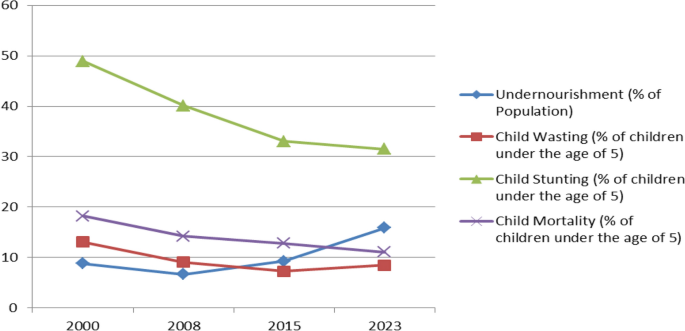
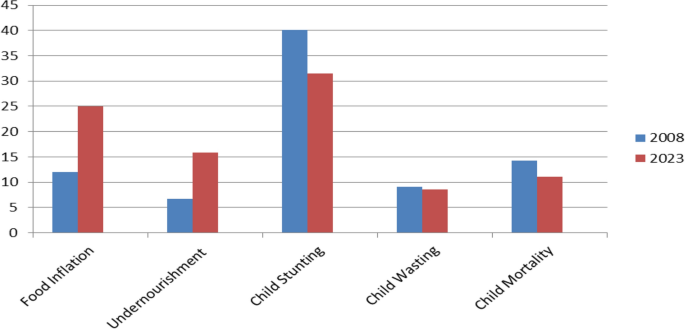
There is a positive relationship between malnutrition and food inflation in Nigeria [38]. From Fig. 2, malnutrition (undernourishment) in children and adults increased simultaneously with the annual inflation rate between 2008 and 2023. As malnutrition increased, its related diseases such as child stunting, child wasting, and infant mortality reduced over time. The decreased incidence of these childhood diseases could have resulted from interventions by the WFP and other related healthcare givers in Nigeria, like GlobalGiving and Angels Home Care Services [39].
Food inflation and undernourishment (malnutrition) rates increased between 2008 and 2023 (positive relationship) while child-related diseases like child wasting, child mortality, and child stunting, declined within the same period (see Fig. 3).
There has been an increase of 155 percent in food inflation in Nigeria from May 2014 to May 2023. This means that general prices of goods and consumables have doubled over the past ten years. Natural disasters, insecurity, and the rising cost of transportation are some other major factors underlying Nigeria’s hike in consumable goods prices. However, measures to tackle food insecurity have been strategically planned by agencies of the WFP [4] (Fig. 4).

5 Impact of hunger and food insecurity in Nigeria
5.1 Health consequences
Chronic hunger and malnutrition lead to increased rates of stunting, wasting, and other health issues, especially among children.
5.2 Educational setbacks
Malnourished children struggle with cognitive development, have lower school attendance, and perform worse academically.
5.3 Economic burden
The costs of healthcare and lost productivity due to hunger and malnutrition place a significant burden on Nigeria’s economy. The level of crime rate and other social vices will rise which poises great burden to the government.
Table 1 depicts Nigeria’s Global Hunger trend in 2023, with relevant indicators such as under-nourishment, child wasting, child stunting and child mortality from 2000 to 2023..
From Table 1, child mortality rate, child stunting rate, child wasting rate decline continuously from 2000 to 2023 due to efforts made by the government and other humanitarian services, including the United Nations WFP. However, under-nourishment rises in the same period.
6 Nutrition and dietary interventions
Addressing malnutrition is a critical component of the WFP’s work in Nigeria. The organization implements a range of nutrition-focused interventions to improve the health and well-being of vulnerable population, particularly women and children. The WFP in northern Nigeria provides standard nutritious food to children below the age of 5, pregnant, and nursing mothers who are at risk of malnutrition [40].
6.1 Supplementary feeding
The WFP provides specialized nutritious foods, such as fortified cereals and ready-to-use therapeutic foods, to treat and prevent acute malnutrition, especially among children under the age of five and pregnant and lactating women [41].
6.2 Nutrition education
The WFP works to improve nutrition knowledge and practices within communities, educating families on the importance of a balanced diet, proper infant and young child feeding, and hygiene practices to support optimal nutrition [42].
6.3 Capacity building
The WFP strengthens the capacity of local health systems and community-based organizations to deliver effective nutrition services, including the screening, treatment, and referral of malnourished individuals [43].
7 Disaster response and resilience building
Nigeria is vulnerable to a range of natural disasters and climate-related shocks, including floods, droughts, and the impacts of climate change. The WFP plays a crucial role in responding to these emergencies and supporting long-term resilience-building efforts [44].
7.1 Emergency preparedness
The WFP works with local and national authorities to strengthen early warning systems, preposition supplies, and develop contingency plans to ensure timely and effective responses to natural disasters and other emergencies [45].
7.2 Disaster relief
When disasters strike, the WFP mobilizes resources and personnel to provide immediate assistance, including the distribution of food, shelter, and other essential items to affected communities [46].
7.3 Resilience building
The WFP supports long-term initiatives to help communities become more resilient to the impacts of climate change and other shocks. This includes investments in sustainable agriculture, water management, and livelihood diversification [45].
Table 2 depicts Nigeria Hunger Map for 19 northern states and the Federal Capital Territory (FCT), highlighting total population, people with insufficient food consumption, people using crisis or above crisis level food-based coping strategies and people reporting challenges accessing markets.Table 2 Hunger map: Nigeria insights and key trends, 2023
The Hunger Map tracks core key indicators of acute hunger which are measured in terms of household food consumption, livelihood behaviour, child nutritional status, mortality, access to clean drinking water, and other indicators related to human development. The Hunger Map strategically measures trends in household food consumption, consumption-based coping and livelihood changes required to measure multiple aspects of food insecurity in the northern part of Nigeria. The indicators from Table 2 are outcome level 1 indicators in the Integrated Food Security Phase Classification (IPC) framework and they provide early indicators of potential shifts in acute food insecurity in Nigeria [47].
According to the National Bureau of Statistics (NBS), about 133 million of Nigeria’s 218 million people (about 63%) are multi-dimensionally poor (see Table 2). The Survey highlighted quality and affordable education, living standards, health (life expectancy at birth), work, and shocks. The report is unique because it includes MPI of children under 5 years of age [48]. Between 2018 and 2019, the NBS data revealed that 40.1% of Nigeria’s population are living below the monetary poverty line. This offers a meaningful evaluation of the progress made towards a range of WFP objectives in Nigeria.
At the rural level, statistics from the MPI survey revealed that about 86 million indigent and malnourished people (about 65%) live in the northern part of Nigeria, while 47 million (about 35%) live in the southern part of Nigeria. For children, further, MPI statistics revealed that poverty is more severe in the North-West and North-East with 90% and lower in the South-West and South-East with 65.1% and 74%, respectively [48].
8 Partnerships and collaborations
The WFP in Nigeria recognizes the importance of collaboration and partnership to achieve its goals. The organization works closely with the Nigerian government, UN agencies, international NGOs, and local community-based organizations to leverage resources, expertise, and networks to maximize the impact of its interventions.
8.1 Government partnerships
The WFP partners with various government ministries and agencies, including the Ministry of Humanitarian Affairs, Disaster Management, and Social Development, to align its work with national priorities and policies. This collaboration ensures a coordinated and efficient approach to addressing food security challenges. Through a massive collaboration with the Federal Government of Nigeria (FGN), the WFP has implemented income-generating activities and livelihood programmes to bimprove the livelihood standard of the rural people of northern Nigeria [45]. This is in the form of short-term cash, skill acquisition training for Internally Displaced Persons (IDPs), such as carpentry, food processing, vegetable gardening, tailoring, aquaculture, and to mention a few, long-term employment opportunities. All these are basic indicators of the Human Development Index (HDI). Furthermore, the WFP provides capacity strengthening for the Nigerian government by developing and strengthening national policies and strategies, providing technical support for federal government home-grown school feeding programmes, and institutionalizing shocks-responsive social protection, among others [49].
8.2 United Nations (UN) and NGO Collaborations
The WFP works closely with other UN agencies, such as the United Nations International Children Emergency Fund (UNICEF) and the Food and Agricultural Organization of the United Nations (FAO), as well as international and local NGOs, to leverage complementary expertise and resources. This includes joint programming, data sharing, and advocacy efforts to amplify the impact of their interventions. The WFP collaborates with UNICEF and NGO partners to deliver essential nutrition and health services to prevent and cure acute malnutrition in Nigeria. These strategic efforts have produced positive results, especially in Borno state, where a significant drop in malnutrition rate was recorded in 2023 [45]. However, the malnutrition rate is still high in more remote, conflict-affected, areas in the northeastern part of Nigeria [50].
8.3 Community-based partnerships
At the local level, the WFP engages with community-based organizations, traditional leaders, and women’s groups to ensure that its programs are tailored to the specific needs and contexts of different regions. This collaborative approach fosters ownership and sustainability of the interventions [51].
9 Challenges and future outlook
The WFP’s work in Nigeria faces a range of challenges, including ongoing conflicts, economic instability, and the impacts of climate change. Despite these obstacles, the organization remains committed to its mission and is continuously adapting its strategies to address emerging needs and maximize its impact [52].
9.1 (i) Violence and social unrest
Increasing violence against civilians in the northeast posed a strong challenge for WFP to achieve its mission in the region. The insecurity in Nigeria’s northern region has disrupted food supply chains and displaced millions of people from farmlands, thereby resulting in hunger and undermining agricultural recovery efforts. The violence hinders WFP access to remote areas and disrupts the delivery of the WFP food assistance schedule. For instance, food distributions were temporarily stopped in Borno, Yobe, Sokoto, Adamawa, and some other northern states due to the rampant insecurity situation of the region [53].
9.2 (ii) Long-term resilience
While the WFP’s emergency response efforts are crucial, the organization is also focused on building the long-term resilience of communities to withstand future shocks. Despite the critical role of international food aid, in most cases, it does not contribute to long-term resilience, but creates dependency. This dependency highlights the need for capacity-building and sustainable agricultural interventions. This includes investing in sustainable agricultural practices, diversifying livelihoods, and strengthening local institutions and governance structures [54].
9.3 (iii) Funding challenges
Funding has been a major challenge for WFP to execute its mandate. The lack of funds crippled some of the anticipated activities of WFP in the northern Nigeria. For instance, WFP urgently requires USD 206.7 million to continue providing unconditional food assistance to the most vulnerable crisis-affected children and women beyond January 2024. Securing adequate and reliable funding is a persistent challenge for the WFP in Nigeria, as the scale of humanitarian needs often exceeds available resources. The organization is actively seeking to diversify its funding sources and strengthen its partnerships to ensure the sustainability of its programs [55].
9.4 (iv) Logistical challenges
Delivering assistance in a vast and diverse country like Nigeria can be logistically complex, particularly in remote and conflict-affected areas. The WFP is working to enhance its supply chain management, transportation networks, and local partnerships to overcome these challenges [56].
The start of electronic voucher redemption in some operational areas was delayed due to social tensions triggered by community dissatisfaction with scaled-down food distributions. For instance, it is quite challenging to provide enhanced telecommunication services called the Emergency Telecommunication Service (ETS) in Damasak, in the northeastern part of Nigeria, to enable seamless internet connectivity in 8 field locations. This is to enable humanitarian workers to carry out their duties through enhanced and effective communication in remote areas The ETS supplies quality internet services to over 3000 users, from over 90 organizations including NGOs and UN agencies across the northeastern part of Nigeria [45].
10 Addressing food insecurity in Nigeria
Food insecurity remains a significant challenge in Nigeria, with an estimated 12.8 million people facing acute food insecurity in 2022 [4]. The WFP’s work in the country is focused on addressing the multifaceted drivers of this crisis, including conflict, climate change, and economic instability.
The report released by the Food and Agriculture Organization (FAO) and World Food Programme in 2023 on “Hunger Hotspots FAO-WFP early warnings on acute food insecurity: June to November 2023 outlook”, revealed that the major drivers of food insecurity in Nigeria are attributed to flood, displacement, insecurity, economic shocks and farmers and herders clashes. This has led to a massive hike in the prices of basic food and consumables in Nigeria (Fig. 3). On this account, about 24.9 million people are projected to suffer from acute food insecurity in all states of Nigeria, especially the northern part [23].
10.1 Emergency response
The WFP provides immediate food and nutrition assistance to individuals and communities in crisis, particularly those affected by conflict, natural disasters, and economic shocks. This includes the distribution of food rations, cash-based transfers, and specialized nutritional products to address acute malnutrition [57].
10.2 Agricultural livelihoods
The WFP supports the restoration and strengthening of agricultural livelihoods, helping farmers and communities increase their food production and access to markets. This includes providing inputs, training, and infrastructure development to boost sustainable food systems [58].
10.3 Community resilience
The WFP works to build the capacity of local institutions and communities to anticipate, prepare for, and respond to shocks and stresses. This includes strengthening early warning systems, promoting disaster risk reduction, and supporting the development of community-based coping mechanisms [27].
The major findings can be summarised as follow:
- 1.The impact of the WFP, in collaboration with the government, private sector and other humanitarian agencies in Nigeria, has caused hunger, poverty and other related cases of malnourishment such as child mortality, child stunting, and child wasting, to decline continuously, between 2008 and 2023.
- 2.There was an increase in food inflation and undernourishment in Nigeria during the period of this study.
- 3.There is a positive relationship between malnutrition and food inflation in Nigeria during the period of this study.
- 4.The WFP operations in Nigeria have positively and significantly contributed to human development, especially in the Northern part of Nigeria.
11 Limitations of the study
The study is limited by the dearth of quantitative data relevant for a more reliable and efficient interpretation of the major findings. In addition, the methodology of this study influenced the interpretation of the extent of inequality and deprivation of the basic necessities of life (food, clothing and shelter) that cause hunger and poverty. Other indicators include the quality of life, extent of prevalence and intensity of hunger, malnutrition and poverty, in Nigeria.
12 Areas for further research
- 1.1.The effects of malnutrition and poverty on human development in Nigeria.
- 2.2.Food insecurity and inflation in Nigeria: a cointegration analysis
- 3.3.Poverty, food inflation and malnutrition Nexus: the case of a green economy with untapped natural resources.
13 13. Conclusion
The United Nations World Food Programme (WFP) plays a vital role in addressing malnutrition, food insecurity, and providing humanitarian assistance in the northern part of Nigeria. With a comprehensive approach that spans emergency response, long-term development, and cross-sector partnerships and collaborations, the WFP is making a significant impact in improving the lives of millions of Nigerians facing the challenges of poverty, conflict, and climate change, especially in the northern part of the country. At the heart of the WFP’s work in northern Nigeria is a commitment to reaching the most vulnerable populations, including Internally Displaced Persons (IDPs), refugees, and those affected by conflict, natural disasters, and economic shocks. The organization’s interventions span emergency food distributions, nutrition support, livelihood assistance, and long-term capacity building to help communities become more self-reliant and resilient. The WFP has been able to combat food insecurity through emergency response, agricultural livelihoods, community resilience among others, with the help of its local and international partnerships and collaborations. Furthermore, through its supplementary feeding, nutrition education and capacity building, the WFP has been able to address malnutrition in northern Nigeria. However, The WFP’s work in Nigeria faces a range of challenges, including ongoing conflicts, funding, logistics, long-term resilience, economic instability, and the impacts of climate change. Despite these obstacles, the organization remains committed to its mission and is continuously adapting its strategies to address emerging needs and maximize its impact in Nigeria. Looking ahead, the WFP in Nigeria remains committed to its vision of a food-secure and resilient nation. By continuing to innovate, adapt, and forge strategic partnerships, the organization aims to make significant strides in addressing the complex and multifaceted challenges of food insecurity, malnutrition, and humanitarian crises in the years to come.
14 Recommendations
- (1)The WFP should increase its collaborations and partnerships with the Federal, State and Local Governments in Nigeria, NGOs and the private sector, to provide food assistance and a holistic package of a transformative malnutrition prevention with behaviour and social change communication, skills development, asset creation and supportive livelihood activities to areas prone to crisis and food-insecure people
- (2)The WFP in collaboration with other agencies should support the provision of a holistic, multi-regional, nutrition-sensitive package to malnourished and nutritionally vulnerable people in the north and other rural areas of the country.
- (3)In a bid to improve diets, there should be the provision of integrated packages of climate-adaptive livelihood and nutritional activities to vulnerable groups, especially those with nutritionally vulnerable groups.
- (4)Furthermore, it is necessary to provide support and enhance food production in Nigeria through climate-smart, gender-transformative, youth-inclusive, commodity quality management, post-harvest and marketing strategies to smallholder farmers in rural areas. This will reduce food inflation, malnutrition and poverty and will make them more productive, engaging, and self-reliant and above all, improve the quality of life in Nigeria.
Data availability
No datasets were generated or analysed during the current study.
Code availability
Not applicable.
References
- Adeniyi AG, Ighalo JO, Adeyanju CA. Materials-to-product potentials for sustainable development in Nigeria. Int J Sustain Eng. 2021;14(4):664–71. https://doi.org/10.1080/19397038.2021.1896591.Article Google Scholar
- Adeola AO, Akingboye AS, Ore OT, Oluwajana OA, Adewole AH, Olawade DB, et al. Crude oil exploration in Africa: socio-economic implications, environmental impacts, and mitigation strategies. Environ Syst Decis. 2022;42(1):26–50. https://doi.org/10.1007/s10669-021-09827-x.Article PubMed Google Scholar
- Yusuf A, Mohd S. Growth and fiscal effects of insecurity on the Nigerian economy. Eur J Dev Res. 2023;35(4):743–69. https://doi.org/10.1057/s41287-022-00531-3.Article Google Scholar
- Wudil AH, Usman M, Rosak-Szyrocka J, Pilař L, Boye M. Reversing years for global food security: a review of the food security situation in Sub-Saharan Africa (SSA). Int J Environ Res Public Health. 2022;19(22):14836. https://doi.org/10.3390/ijerph192214836.Article PubMed PubMed Central Google Scholar
- Ofuani-Sokolo AI, Okunrobo HO. An examination of the Child’s Right to survival and development in Nigeria—The Boko Haram Insurgency in context. Hungarian J Leg Stud. 2023;64(1):88–114. https://doi.org/10.1556/2052.2023.00445.Article Google Scholar
- Nemine EL. Flood disasters in Nigeria : farmers and governments’ mitigation efforts. J Biol Agric Healthc. 2015;5(14):150–5.Google Scholar
- Adefisoye TO, Arum I. Inter-agency collaboration and the dilemma of flood management and policy implementation in Nigeria. IKENGA Int J Inst African Stud. 2021;22(3):1–26. https://doi.org/10.53836/ijia/2021/22/3/007.Article Google Scholar
- Ogbu CE, Oparanma CO, Ogbu SC, Ujah OI, Chinenye NS, Ogbu CP, et al. Neighborhood unsafety, discrimination, and food insecurity among Nigerians aged 15–49. Int J Environ Res Public Health. 2023;20(17):6624. https://doi.org/10.3390/ijerph20176624.Article PubMed PubMed Central Google Scholar
- Shaibu EG. Appraising the obligations of the Nigerian state in achieving zero hunger. ABUAD Law J. 2023;11(1):45–77. https://doi.org/10.53982/alj.2023.1101.03-j.Article Google Scholar
- Godoy D, Dewbre J, PIN, Amegnaglo CJ, Soglo YY, Akpa AF, et al. The future of food and agriculture: trends and challenges. Futur Food AGRIC. Trends Challenges. 2014.
- Global Report on Internal Displacement. Global report on internal displacement: internal displacement and food security. Intern Displac food Secur. 2023;2023:1–76.Google Scholar
- International Organization for Migration. IOM Operations on Internal Displacement. 2017;(March).
- Kumareswaran K, Jayasinghe GY. Systematic review on ensuring the global food security and covid-19 pandemic resilient food systems: towards accomplishing sustainable development goals targets. Discov Sustain. 2022;3(1):29. https://doi.org/10.1007/s43621-022-00096-5.Article PubMed PubMed Central Google Scholar
- Thurstans S, Sessions N, Dolan C, Sadler K, Cichon B, Isanaka S, et al. The relationship between wasting and stunting in young children: a systematic review. Matern Child Nutr. 2022. https://doi.org/10.1111/mcn.13246.Article PubMed PubMed Central Google Scholar
- Ogunniyi AI, Omotayo AO, Olagunju KO, Rufai MA, Salman KK, Omotayo OP, et al. Evaluating the role of households’ food security status and socioeconomic determinants on child mortality in Nigeria. Child Indic Res. 2024;17(4):1687–714. https://doi.org/10.1007/s12187-024-10134-5.Article Google Scholar
- Manikas I, Ali BM, Sundarakani B. A systematic literature review of indicators measuring food security. Agric Food Secur. 2023;12(1):10. https://doi.org/10.1186/s40066-023-00415-7.Article PubMed PubMed Central Google Scholar
- Otekunrin OA, Mukaila R, Otekunrin OA. Investigating and quantifying food insecurity in Nigeria: a systematic review. Agriculture. 2023;13(10):1873. https://doi.org/10.3390/agriculture13101873.Article Google Scholar
- Okorie DI, Wesseh PK Jr. Fossil fuel subsidy removal, economic welfare, and environmental quality under alternative policy schemes. J Clean Prod. 2024;450: 141991. https://doi.org/10.1016/j.jclepro.2024.141991.Article Google Scholar
- Omotosho BS. Oil price shocks, fuel subsidies and macroeconomic (in)stability in Nigeria. Cent Bank Niger J Appl Stat. 2020;10(2):1–38. https://doi.org/10.33429/cjas.10219.1/6.Article Google Scholar
- Wan, G. A, Zhou Z. Food insecurity in Asia. Food Insecurity Asia Why Institutions Matter. 2017.
- Akerele D, Fadare O, Ogunniyi A, Adeyemi O, Rufai M. Effects of food price changes on child undernutrition among agricultural households in Nigeria. World Dev Sustain. 2024;4: 100158. https://doi.org/10.1016/j.wds.2024.100158.Article Google Scholar
- Reviews T, The U, Arrangement CF, For R, Access AOF, Of M, et al. Credit facility arrangement , and request for report ; and statement by the executive. 2015;(15).
- Daum T. Mechanization and sustainable agri-food system transformation in the Global South. A review. Agron Sustain Dev. 2023;43(1):16. https://doi.org/10.1007/s13593-023-00868-x.Article Google Scholar
- Okwuwada N. Munich personal RePEc archive the modern day consequences, causes, and nature of kidnapping, terrorism, banditry, and violent crime in Nigeria : a comprehensive analysis. Munich Pers RePEc Arch. 2023;117671:1–45.Google Scholar
- Oweibia M, Elemuwa UG, Akpan E, Daniel ET, Oruikor GJ, Tarimobowei E, et al. Analyzing Nigeria’s journey towards sustainable development goals: a comprehensive review from inception to present. Qeios. 2024. https://doi.org/10.32388/8O5QEG.Article Google Scholar
- Durao S, Visser ME, Ramokolo V, Oliveira JM, Schmidt B-M, Balakrishna Y, et al. Community-level interventions for improving access to food in low- and middle-income countries. Cochrane Database Syst Rev. 2020. https://doi.org/10.1002/14651858.CD011504.pub2.Article PubMed PubMed Central Google Scholar
- World Food Programme. WFP Global, Operational Response Plan 2022. World Food Program. 2022;(November).
- Weber MB, Palmer W, Griffin M, Welsh JA. Infant and young child feeding practices and the factors that influence them: a qualitative study. J Health Popul Nutr. 2023;42(1):32. https://doi.org/10.1186/s41043-023-00371-9.Article PubMed PubMed Central Google Scholar
- Ogunleke AO, Olawuyi SO, Ijila OJ. The pattern of healthy diets and zero hunger among households in South-West Nigeria: application of linear approximation to quadratic almost ideal demand system. Front Public Health. 2023. https://doi.org/10.3389/fpubh.2023.1211479.Article PubMed PubMed Central Google Scholar
- Areas LG, Developed SAM, Cluster GN, Agency US, Development I, Assistance H. Treatment of acute malnutrition using simplified approaches standard operating procedures 1. 2022;(November):1–10.
- Okonkwo UU, Ukaogo V, Kenechukwu D, Nwanshindu V, Okeagu G. The politics of rice production in Nigeria: the Abakaliki example, 1942–2020. Cogent Arts Humanit. 2021. https://doi.org/10.1080/23311983.2021.1880680.Article Google Scholar
- Solaja S, Kolawole A, Awe T, Oriade O, Ayojimi W, Ojo I, et al. Assessment of smallholder rice farmers’ adaptation strategies to climate change in Kebbi state, Nigeria. Heliyon. 2024;10(15): e35384. https://doi.org/10.1016/j.heliyon.2024.e35384.Article PubMed PubMed Central Google Scholar
- Ehigiator S. 600 Young Models Eye Global Spotlight, Audition for ARISE Fashion Week PDP to Conduct Fresh Guber Primary in Abia Following Ikonne’s Death Tinubu: Petrol Scarcity, Naira Redesign Let fuel be scarce, change ink of naira , I will win, declares former. 2023.
- McLean C, Baur D, Harvey P, Lind J, Longhurst Rachel Sabates-Wheeler D, Slater R, et al. country reviews of social assistance in crises. 2021;(June).
- Osman AA, Abebe GK. Rural displacement and its implications on livelihoods and food insecurity: the case of inter-riverine communities in Somalia. Agriculture. 2023;13(7):1444. https://doi.org/10.3390/agriculture13071444.Article Google Scholar
- Smith L, López Sánchez GF, Tully MA, Jacob L, Kostev K, Oh H, et al. Temporal trends in food insecurity (hunger) among school-going adolescents from 31 countries from Africa, Asia, and the Americas. Nutrients. 2023;15(14):3226. https://doi.org/10.3390/nu15143226.Article PubMed PubMed Central Google Scholar
- John C, Poh BK, Jalaludin MY, Michael G, Adedeji I, Oyenusi EE, et al. Exploring disparities in malnutrition among under-five children in Nigeria and potential solutions: a scoping review. Front Nutr. 2024. https://doi.org/10.3389/fnut.2023.1279130.Article PubMed PubMed Central Google Scholar
- Fajobi DT, Ajetomobi JO, Raufu MO, Fajobi MO, Paramasivam P. Effects of food price on nutrition outcomes among women in Nigeria. Food Sci Nutr. 2024;12(1):94–104. https://doi.org/10.1002/fsn3.3737.Article CAS PubMed Google Scholar
- Makinde OA, Olamijuwon E, Mgbachi I, Sato R. Childhood exposure to armed conflict and nutritional health outcomes in Nigeria. Confl Health. 2023;17(1):15. https://doi.org/10.1186/s13031-023-00513-0.Article PubMed PubMed Central Google Scholar
- Omachi BA, van Onselen A, Kolanisi U. Nutrition knowledge and health vulnerability of mothers of pre-school children in north-central, Nigeria. PLoS ONE. 2024;19(1): e0292252. https://doi.org/10.1371/journal.pone.0292252.Article CAS PubMed PubMed Central Google Scholar
- Interventions N. Programming for nutrition-specific interventions nutrition at the. 2013;(July).
- Komakech JJ, Emerson SR, Cole KL, Walters CN, Rakotomanana H, Kabahenda MK, et al. A peer-led integrated nutrition education intervention through care groups improved complementary feeding of infants in postemergency settlements in the West-Nile Region in Uganda: a cluster randomized trial. Curr Dev Nutr. 2023;7(3): 100042. https://doi.org/10.1016/j.cdnut.2023.100042.Article CAS PubMed PubMed Central Google Scholar
- Banda K, Chilengi-Sakala S, Chunga CC, Solomon H, Chalwe V, Nkaama JM, et al. Towards universal coverage for nutrition services in children under five years—a descriptive analysis of the capacity of level one hospitals to provide nutrition services in five provinces of Zambia. PLoS ONE. 2020;15(5): e0232663. https://doi.org/10.1371/journal.pone.0232663.Article CAS PubMed PubMed Central Google Scholar
- Federal Ministry of Environment. National Drought Plan. Fed Repub Niger. 2018;1–103.
- Board E. Executive Board WFP Management Plan ( 2021–2023 ) Executive summary. 2021;(November 2020):16–20.
- WFP. Global Operational Response Plan 2022. World Food Program. 2022;(February).
- Insecurity F, Glance ATA. : Colombia insight and key trends. 2023;(November).
- National Bureau of Statistics. Nigeria Multidimensional poverty Index (2022). 2022 Multidimens Poverty Index Rep. 2022;184.
- Bowen T, del Ninno C, Andrews C, Coll-Black S, Gentilini U, Johnson K, Kawasoe Y, Kryeziu A, Maher B, Williams A. Adaptive social protection: building resilience to shocks. Washington: World Bank; 2020. https://doi.org/10.1596/978-1-4648-1575-1.Book Google Scholar
- Dunn G. The impact of the Boko Haram insurgency in Northeast Nigeria on childhood wasting: a double-difference study. Confl Health. 2018;12(1):6. https://doi.org/10.1186/s13031-018-0136-2.Article PubMed PubMed Central Google Scholar
- Doustmohammadian A, Mohammadi-Nasrabadi F, Keshavarz-Mohammadi N, Hajjar M, Alibeyk S, Hajigholam-Saryazdi M. Community-based participatory interventions to improve food security: a systematic review. Front Nutr. 2022. https://doi.org/10.3389/fnut.2022.1028394.Article PubMed PubMed Central Google Scholar
- Gyimah J, Saalidong BM, Nibonmua LKM. The battle to achieve sustainable development goal two: the role of environmental sustainability and government institutions. PLoS ONE. 2023;18(9): e0291310. https://doi.org/10.1371/journal.pone.0291310.Article CAS PubMed PubMed Central Google Scholar
- Nations U, Council S. Monitoring food security in food crisis countries and territories with conflict situations. 2023. https://doi.org/10.4060/cc5722en.
- Sperling F, Havlik P, Denis M, Valin H, Palazzo A, Gaupp F, et al. Toward resilient food systems after COVID-19. Curr Res Environ Sustain. 2022;4: 100110. https://doi.org/10.1016/j.crsust.2021.100110.Article CAS PubMed Google Scholar
- Malango R. Use of funds and achieved results rapid response Resident / Humanitarian Coordinator. 2020.
- Ahmed Z, Ataullahjan A, Gaffey MF, Osman M, Umutoni C, Bhutta ZA, et al. Understanding the factors affecting the humanitarian health and nutrition response for women and children in Somalia since 2000: a case study. Confl Health. 2020;14(1):35. https://doi.org/10.1186/s13031-019-0241-x.Article PubMed PubMed Central Google Scholar
- Nisbet C, Lestrat KE, Vatanparast H. Food security interventions among refugees around the globe: a scoping review. Nutrients. 2022;14(3):522. https://doi.org/10.3390/nu14030522.Article CAS PubMed PubMed Central Google Scholar
- Wangu J. The need for a food systems approach in smallholder food and nutrition security initiatives: lessons from inclusive agribusiness in smallholder communities. Foods. 2021;10(8):1785. https://doi.org/10.3390/foods10081785.Article PubMed PubMed Central Google Scholar
