

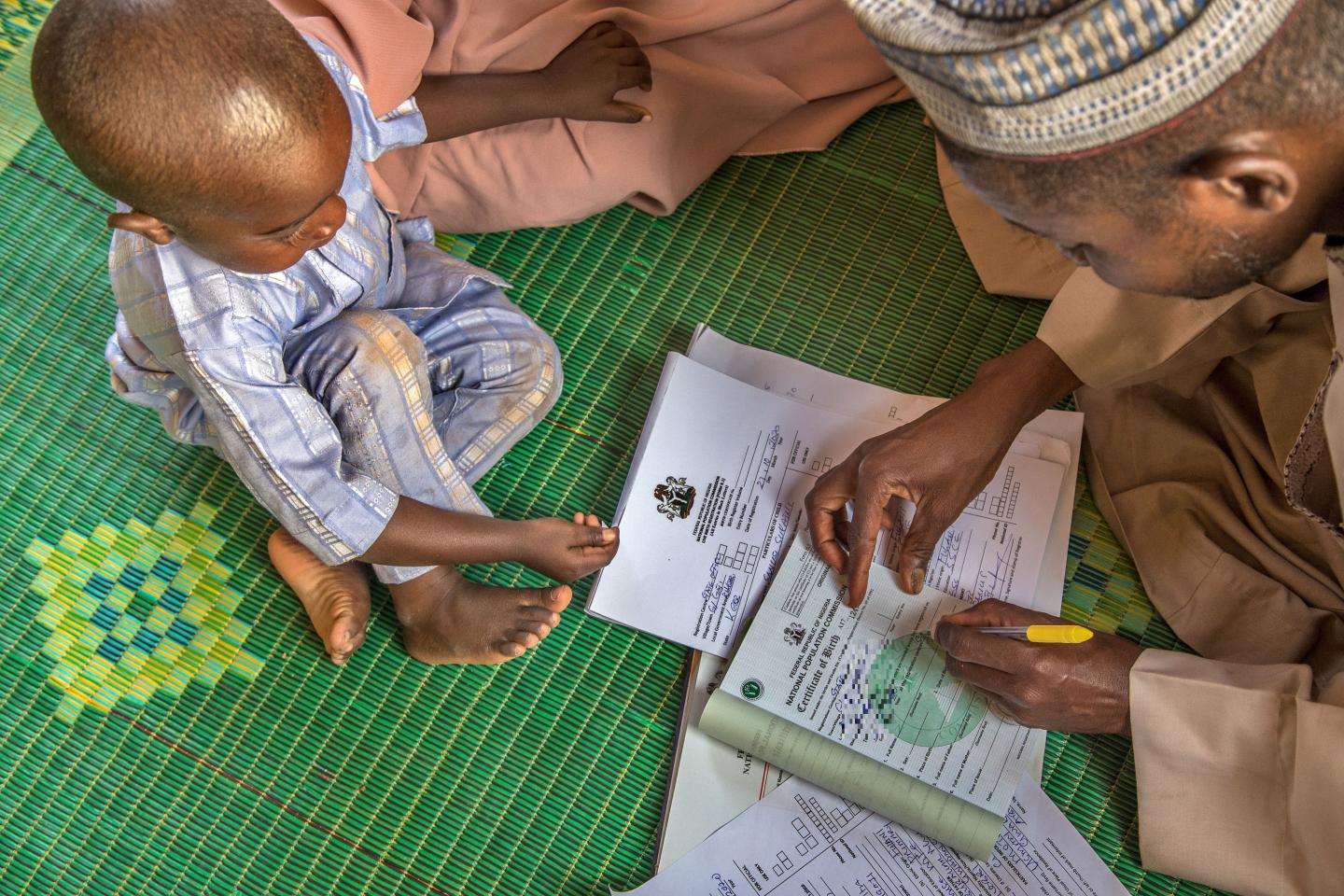
The United Nations Children’s Fund and the National Population Commission have called for stronger efforts to ensure that every Nigerian child is registered at birth, describing legal identity as a fundamental right.
The organisations raised the concern at a media dialogue focused on improving birth registration across South-West states and Edo, where they advocated digital and universal registration for children under one year.
According to the information presented at the dialogue, only about 43 per cent of more than five million children born annually in Nigeria are registered on time, leaving more than half of children under five without official birth records.
UNICEF noted that birth registration provides children with legal identity and improves access to essential services, including education, healthcare and social protection.
The organisation’s Chief of Lagos Field Office, Celine Lafoucriere, described civil registration as the foundation of a child’s identity. A registered child, she noted, will also have clearer access to rights such as voting, property ownership and inheritance later in life.
Recent administrative data indicate that under-five registration has increased to 57 per cent, while about 3.5 million children in the South-West and Edo remain unregistered.
UNICEF and the NPC urged governments to make registration easier by expanding services to hospitals, where many births take place, and using digital technology to improve accessibility.
They also called on traditional rulers, religious leaders, civil society organisations and the media to tackle cultural and geographic barriers that prevent parents from registering their children.
According to the organisations, ensuring every child has a legal identity would improve government planning and help Nigeria provide more effective social services.
