

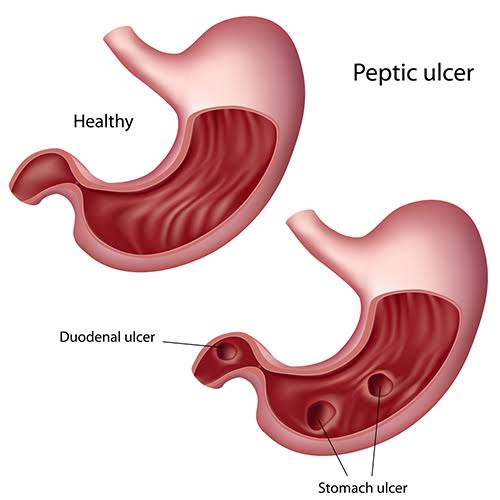
Peptic ulcer disease in children is a serious but often overlooked health condition.
Peptic ulcer refers to open sores in the stomach or upper small intestine lining.
Although less common in children, it still affects school-age children and adolescents.
Therefore, awareness and early medical attention are extremely important.
Peptic ulcer disease in children is commonly caused by Helicobacter pylori infection.
This bacterium spreads easily through poor hygiene and contaminated food or water.
In addition, misuse of pain-relieving medications increases ulcer risk significantly.
Drugs like ibuprofen, aspirin, and diclofenac can erode the stomach lining.
As a result, continuous erosion may lead to painful ulcers.
Other contributing factors include malnutrition, weakened immunity, and chronic illnesses.
Likewise, severe infections, burns, or physical stress can increase stomach acid production.
Consequently, excess acid damages the stomach lining and promotes ulcer formation.
If peptic ulcers remain untreated, children may experience dangerous complications.
They can lose blood through vomiting or passing dark, black stools.
This blood loss often leads to iron deficiency anaemia.
Anaemia may cause weakness, paleness, dizziness, and in severe cases, shock.
Sometimes, urgent blood transfusion or surgery becomes necessary.
Furthermore, untreated childhood ulcers may continue into adulthood.
This increases the risk of chronic ulcer disease and rare stomach cancer.
Contrary to common beliefs, spicy foods do not directly cause ulcers.
However, spicy meals may worsen symptoms in infected children.
Symptoms vary depending on age and severity.
Older children may report burning abdominal pain, bloating, nausea, or vomiting.
Younger children may show feeding difficulties, excessive crying, or black stools.
Diagnosis involves stool tests, breath tests, or endoscopy when required.
Prevention relies on hygiene, balanced nutrition, and proper medication use.
Ultimately, early treatment ensures healing and prevents life-threatening complications.
