

Australian Prime Minister Anthony Albanese has said that a father and son who opened fire on crowds at Bondi Beach were motivated by Islamic State ideology, in one of the deadliest mass shootings in the country’s history.
The attack happened on Sunday evening during celebrations for the Jewish festival of Hanukkah. Sajid Akram and his son, Naveed Akram, began shooting at people gathered at the popular Sydney beach, killing 15 people and injuring dozens more.
Authorities believe the attack was intended to spread fear within Australia’s Jewish community. While investigators are still examining the suspects’ full motives, Albanese said early evidence points to extremist radicalisation.
“It would appear that this was motivated by Islamic State ideology,” Albanese told national broadcaster ABC. He added that the world has struggled with violent extremism since the rise of ISIS more than a decade ago, describing it as an ideology rooted in hate.
Overseas Travel Under Investigation
Australian media reports revealed that the father and son had recently travelled to the Philippines. Officials are now investigating whether they met Islamist extremists during the trip.
Manila’s immigration department confirmed that the pair spent most of November in the Philippines, with Davao listed as their final destination. The region, located on the southern island of Mindanao, has a long history of Islamist insurgency.
Immigration records showed that Sajid Akram was an Indian national, while his son Naveed held Australian citizenship.
Weapons, Explosives, and Warning Signs
After the attack, police found a car registered to Naveed Akram parked near Bondi Beach. Inside, officers discovered improvised explosive devices and two homemade ISIS flags, according to New South Wales Police Commissioner Mal Lanyon.
The revelations have raised questions about whether the attack could have been prevented. Albanese confirmed that Naveed Akram had been known to Australia’s intelligence agency since 2019.
“They interviewed him, his family members, and people around him,” the prime minister said. “At that time, he was not considered an imminent threat.”
Investigators believe Naveed told his mother he was going on a fishing trip on the day of the attack. Instead, police say he and his father were staying in a rental apartment, planning the assault.
The pair reportedly fired long-barrelled guns at the beach and a nearby park for about 10 minutes before police shot and killed Sajid Akram. Naveed Akram, 24, remains in a coma under police guard.
Calls for Stricter Gun Laws
Among the victims were a 10-year-old girl and two Holocaust survivors. Forty-two others were taken to hospital with gunshot wounds and other injuries.
In response, Australian leaders have agreed to review gun laws that allowed Sajid Akram to legally own six firearms. Mass shootings have been rare in Australia since the 1996 Port Arthur massacre, which led to strict gun control measures, including a nationwide gun buyback.
However, many Australians now question whether existing laws are strong enough, especially with the rise of online gun sales and private ownership.
“This horrific situation makes me feel the laws need to be stricter,” said David Sovyer, 43, speaking at Bondi Beach. Retiree Allan McRae, 75, added that fewer people should have access to guns.
Community Mourning and Support
The attack has also renewed criticism over Australia’s response to rising antisemitism. Israel’s ambassador to Australia, Amir Maimon, said he had warned of growing dangers in recent years. Israeli Prime Minister Benjamin Netanyahu linked the violence to Australia’s recent recognition of Palestinian statehood, saying it had fueled antisemitic tensions.
As the nation mourns, thousands of Australians have stepped forward to help. Red Cross Australia said more than 7,000 people donated blood on Monday, setting a new national record.
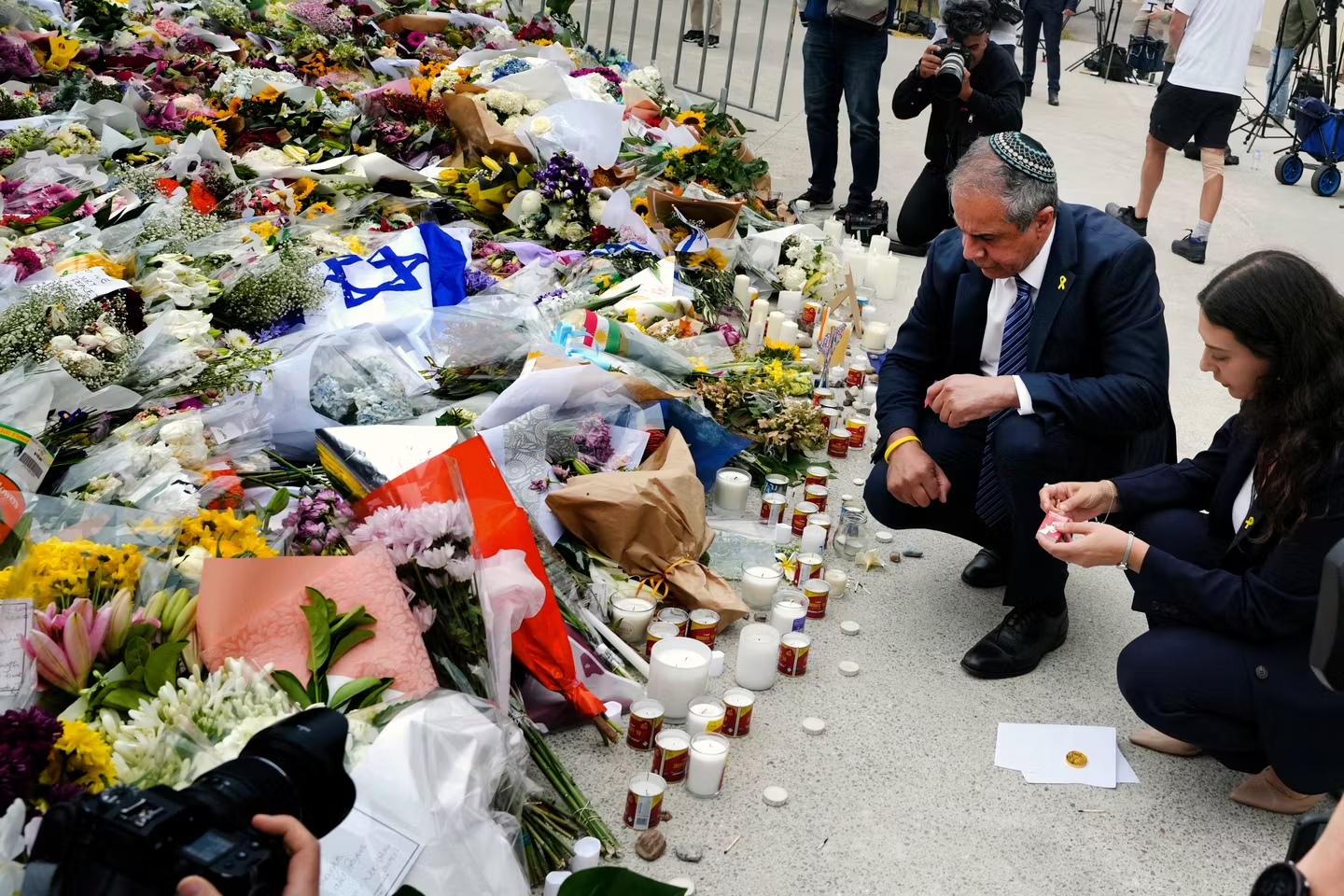
At Bondi Beach, a growing memorial of flowers now stands in tribute to the victims. Hundreds gathered, including members of the Jewish community, to sing, pray, and support one another.
Leading a candle-lighting ceremony, a rabbi told mourners, “The only strength we have is if we bring light into the world.”
