

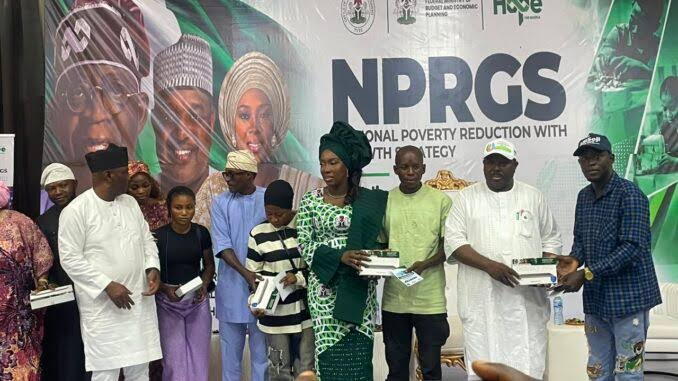
The Federal Government’s National Poverty Reduction with Growth Strategy aims to help Nigerians escape poverty through vocational training, entrepreneurship support and access to productive equipment.
The programme is designed to equip beneficiaries with practical tools, ranging from sewing machines and makeup kits to laptops and solar technology, to support employment and self-employment.
The strategy comes amid growing demand for vocational training. A separate Federal Ministry of Education initiative reported more than 1.3 million applications for technical and vocational education, with 160,000 young people matched to training and more than 73,000 enrolled.
Dr Abiola Arogundade, Senior Special Assistant to President Bola Tinubu on Technical, Vocational and Entrepreneurship Education, is working to advance skills development and technology-driven empowerment under the administration’s Renewed Hope Agenda.
The wider poverty-reduction strategy supports the government’s ambition to lift 100 million Nigerians out of poverty over 10 years, while the skills intervention targets five million young Nigerians.
The government has also provided more than 100 HP laptops to schools alongside opportunities to learn robotics and artificial intelligence.
However, training and equipment alone may not guarantee sustainable income. Beneficiaries also need mentorship, start-up capital, access to customers and opportunities to apply their skills.
The programme’s success will ultimately depend on whether participants can secure employment, build viable businesses and improve their household incomes.
Measuring these long-term outcomes will be essential to determining how effectively the intervention contributes to Nigeria’s poverty-reduction objectives.
